

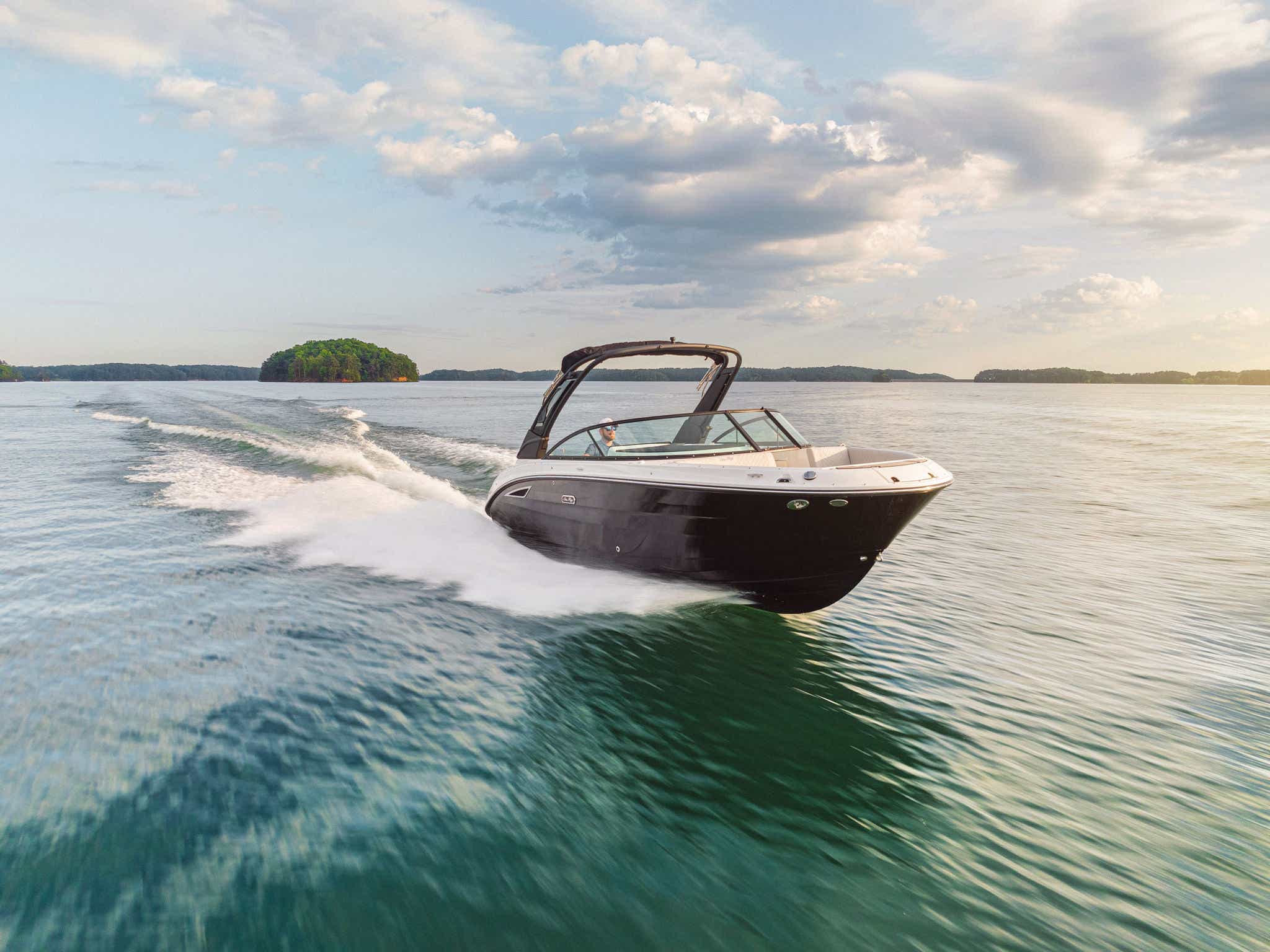
Why to Consider
Accessible Boating Guide: Low-Barrier Boarding Features and Layouts for Seniors
The information provided is for general informational purposes only. This information is based on the author’s personal experience and does not constitute financial or legal advice. You should consult with a professional and/or conduct your own independent research to verify any information in this post prior to making a financial decision or otherwise.
A boat can have generous seating, a beautiful bow lounge and room for the whole family, yet still leave one person on the dock. For older relatives who use a cane, walker or an arm for support, the real question is how the boat connects its swim platform, cockpit and seating areas.
The layouts that make family boating more accessible tend to share a few architectural choices: a walk-through transom rather than a gunwale climb, a stable platform with a handhold line that continues toward the cockpit, and a level sole once aboard. Those details reduce the number of decisions an older passenger must make while the dock and boat are moving independently.
No recreational day boat should be treated as universally accessible, and a wide walkway does not automatically make a boat suitable for wheelchair roll-on boarding. Dock height, water level, footwear, sea state and the passenger’s individual mobility all matter. But a boat designed around level transitions gives your family a much better starting point than asking someone to step onto a cushion, swing a leg over a sidewall or accept a lift from another passenger.
Flush Transom Walk-Throughs and Wide Gates Eliminate the Gunwale Climb
The stern is where accessible boating begins. A traditional runabout may ask a guest to climb over a coaming or gunwale, then step down into the cockpit. That movement can be manageable for an athletic passenger, but it places a difficult demand on hips, knees, balance and grip strength.
A walk-through transom changes the sequence. Rather than boarding over the side or across seating, a guest moves from the swim platform through a dedicated opening and into the cockpit. Power Boat Magazine’s review of the Sea Ray SDX 250 OB describes this kind of walk-through arrangement as a direct-flow feature that removes the need to climb over gunwales or seating. Powerboat and RIB likewise identifies the direct connection between the swim platform and interior cockpit as the advantage of a walk-through transom on deck boats and bowriders.
For a grandparent using a cane, that direct path matters more than a dramatic stern profile. They can keep the cane on the deck surface, take one controlled step at a time and avoid turning sideways to clear a high sidewall. For someone using a walker, the first question is whether the walker can pass through the opening without being lifted, tilted or handed across the transom.
Before considering ramps, portable steps or other add-ons, study the basic path from dock to seat. The following matrix is a practical way to compare floorplans during a dealer visit.
A wide gate is useful only if it remains a clear gate in daily use. Ask where the life jackets, tow lines and cooler will go. Stand at the dock, look through the opening and follow the route to the preferred seat. If the route depends on moving cushions, stepping around hardware or asking another passenger to steady the guest, the layout is already asking too much.
This is also where sleek sport-boat styling can conflict with family access. Tiered sunpads and narrow passages may create attractive lounge areas, but they can turn boarding into a series of unstable transfers. A transom walk-through keeps the stern focused on its first job: getting people aboard with their footing intact.
Full-Width Swim Platforms and Continuous Grab Rails Secure Dockside Transitions
The swim platform is the staging area between a floating dock and the cockpit. Its usefulness is not defined by square footage alone. A helpful platform gives a passenger a place to pause, face the boat and find a secure handhold before taking the next step.
A broad platform can make that pause more comfortable, particularly when family members board one at a time and need space for a cane or walker. But the platform must work with the dock you use. A platform that sits close to dock height at one marina may be substantially above or below it at another because of water levels, tides or dock design. That is why boarding should be tested at the location and conditions closest to your regular boating day.
The handhold path deserves equal attention. Power & Motoryacht’s safety guidance emphasizes grabrails, reboarding means and secure handholds designed to handle directional loads as ways to help prevent slips and falls. For an older passenger, the practical test is simple: can they hold something secure from the dock, across the platform and into the cockpit without having to release their grip before finding the next rail?
On applicable Sea Ray SDX 250 configurations, integrated swim-platform and designated-grabrail design is intended to create a stable transition area between water, docks and cockpit spaces. That does not remove the need to inspect the exact boat. Equipment, options and dock conditions vary, and a grab rail positioned well for a tall adult may not be reachable for a shorter passenger stepping down from a higher dock.
During an in-person evaluation, have the older family member use the route as they normally would. A companion should stay close enough to help if requested, but should not pull them aboard to make the layout appear workable. The goal is controlled independence, not a successful one-time rescue.
Pay attention to the surface underfoot as well. Non-skid material, a dry and uncluttered platform, and footwear with dependable traction all affect the transition. A well-planned platform gives a guest time to settle before entering the cockpit; it does not turn the dockside transfer into a rushed step over open water.
Deep Cockpit Freeboards Offer Seated Security Without Interior Elevation Changes
Low-barrier entry should not mean a shallow, exposed place to sit once the boat is underway. The useful balance is a cockpit that is easy to enter from the stern while its sidewalls provide a sense of containment for seated passengers.
Canadian Boating’s discussion of deep cockpits, high freeboard and single-level soles identifies the value of this combination: deeper sides can provide physical containment, while a level sole removes interior trip points that become more consequential in chop. The publication frames the arrangement around passenger security and easier movement for older knees, rather than as a formal mobility study.
For a family boat, this translates to a close look at the cockpit rather than the exterior profile alone. Once aboard, a passenger using a cane should be able to move from the stern entrance to a seat without stepping up onto a raised lounge section or down into a footwell that interrupts the route. Deep coamings can help a seated grandparent feel more settled on a breezy lake day, but a steep interior step can undo that benefit.
The helm area is part of this evaluation. Consider whether the passenger’s preferred seat is across the cockpit from the boarding entry, whether there is room to turn and sit without crossing another guest’s legs, and whether a handhold remains within reach during the move. A single-level cockpit is particularly useful because it limits the need to watch for changes in elevation while the boat moves beneath the passenger.
This does not mean every activity zone must be equally accessible. A bow lounge, cabin companionway or forward sunpad may involve narrower passages or steps. The priority is to establish one dependable route from dock to the cockpit seat where an older family member will spend the day. A boat can still offer other spaces for children and active guests without making the primary social area difficult to reach.
Wide-Beam Deck Boats Provide 10-Passenger Capacity with Clear Mobility Corridors
Large family outings introduce a second problem: people. Even a low-threshold boarding route becomes difficult when bags, coolers, feet and extra passengers close the path from stern to cockpit.
Wide-beam deck boats address that pressure by giving the main social areas more room to breathe. The Sea Ray SDX 250, for example, is rated for up to 14 people and is designed with open cockpit space for movement, according to its current model information. Capacity is not a recommendation to fill every seat. For a multi-generational outing, the more useful question is whether the people you bring can still move through the boat without asking an older passenger to stand, shift or surrender a handhold.
Power Boat Magazine’s SDX 250 OB evaluation also describes wide-beam deck-boat space and open corridors that support movement across the boat’s social zones. That architecture can be especially helpful when one guest uses a cane: a central path remains available between the swim platform, cockpit and bow rather than disappearing beneath crowded seating.
Give mobility corridors a purpose before departure. Keep the stern entry clear. Assign bags and watersports gear to storage rather than the floor. Reserve a seat near the boarding route for the passenger who should not have to cross the boat repeatedly. These are small decisions, but they preserve the advantage of an open floorplan after the family settles in.
A spacious day boat also makes it easier for adult children to remain nearby without hovering. Someone can sit within easy reach of a parent or grandparent while leaving enough room for children to move toward the bow and other guests to gather in the cockpit. The result is a more relaxed day aboard because the family is sharing the boat rather than organizing around one difficult passage.
How to Evaluate a Walk-Through Transom for a Walker or Wheelchair
Boats with the widest walk-through transoms are not automatically wheelchair-accessible. A clear stern opening may accommodate a walker, but full wheelchair roll-on access depends on the entire route: dock height, platform level, threshold, cockpit turning space, doorway clearance and the ability to remain on one level after boarding.
For a walker, bring the actual mobility aid to the sea trial and measure the narrowest point with the gate open. Check whether the walker’s wheels or feet catch on a threshold, hinge, drain channel or deck seam. Then have the user turn toward the seat they would use most often. A passage that accepts the walker only in a straight line may still be impractical if there is no room to reposition in the cockpit.
For a wheelchair user, ask the dealer to demonstrate the exact configuration at the dock. Do not rely on a brochure image or an estimated opening width. Recreational fiberglass day boats in this size range are not a substitute for a vessel designed around wheelchair access, and this guide does not cover custom lifts or hydraulic boarding systems.
Before selecting a boat, complete the final evaluation at dockside:
Compare the dock height with the swim platform at the marina or launch you expect to use.
Board through the transom with the gate fully open and the platform clear of gear.
Confirm that a secure handhold is available before the passenger leaves the dock and remains reachable into the cockpit.
Walk the complete route from platform to seat with the cane, walker or other aid in hand.
Check every threshold, floor change and transition surface under normal footwear.
Repeat the process after the boat has been loaded with the people and gear your family would bring on a typical day.
A sea trial should answer a practical question: can your parent or grandparent come aboard with dignity, settle into the cockpit comfortably and remain part of the day without the family treating every transition as a problem to solve? When the answer is clear at the dock, there is more room for the part of boating that matters most—time together on the water.
This website does not provide financial or legal advice. The information available on this website is provided for general informational and educational purposes only and is not a substitute for professional advice. You should consult with the appropriate professionals prior to making any financial decisions. YOUR USE OR RELIANCE ON ANY OF THE INFORMATION PROVIDED HEREIN IS SOLELY AT YOUR OWN RISK. UNDER NO CIRCUMSTANCE SHALL WE HAVE ANY LIABILITY TO YOU FOR ANY LOSS OR DAMAGE OF ANY KIND INCURRED AS A RESULT OF THE USE OR RELIANCE ON ANY INFORMATION PROVIDED.
Options and features mentioned subject to change. Please confirm availability of all accessories and equipment with an authorized Sea Ray dealer.